
Vinmora: an AI drilling risk assessment and a hole collapse
Vinmora is an illustrative case, not a real incident. An AI model rates the drilling risks of a new well from the field it was trained on next door. It rates hole collapse as low and losses as high. The team builds in mitigations for losses, and the hole collapses.
All names of companies, sites, equipment and people in this case are invented. Any resemblance to a real organisation, site or event is coincidental.
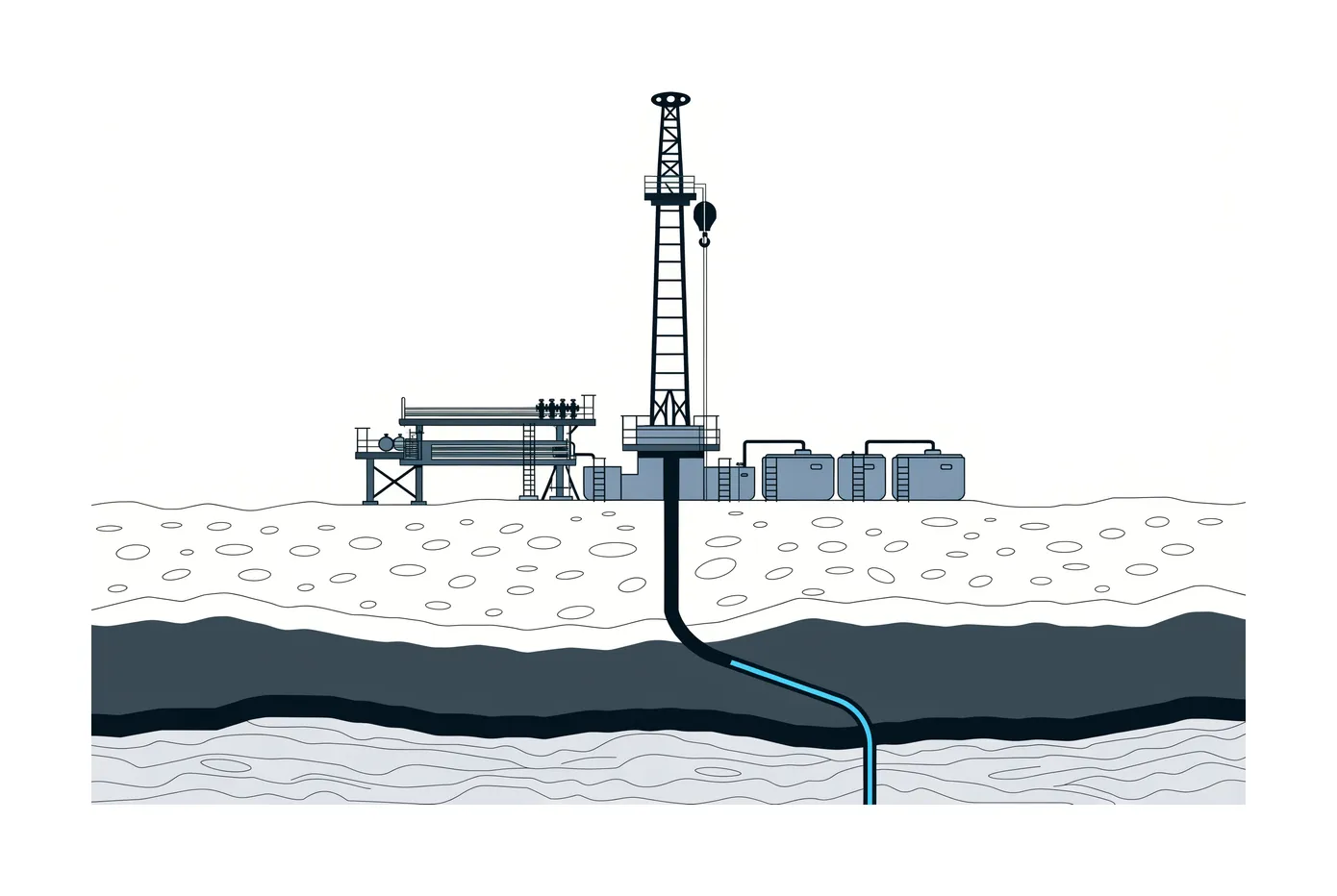
What happened?
A mid-sized operator is developing Vinmora, a new field next to one it has produced for years. During a pilot, its subsurface software added a machine learning feature that rates drilling risks along a planned well from logs, seismic and offset wells. The operator put the feature through management of change before using it.
The model had learned from the adjacent field, where the shales had never caused instability and the main drilling problem was losses into fractured carbonates. For the first Vinmora well it rated losses as exceptionally high, the risk it had learned most about, and hole collapse as low. The subsurface team reviewed the assessment. It matched years of experience next door, and they accepted it.
The team then did what a good team does with a high risk: they mitigated it. They planned the mud weight at the low end of the window to limit losses, and prepared lost-circulation material and contingency procedures.
On logs and seismic, the Vinmora shale looked like the one next door. It differed in one detail that seemed minor: a band of reactive clay a few metres thick, which the adjacent field did not have and the model had never been trained on. At a low mud weight, the clay took on water from the mud and weakened. While drilling it, cavings increased, the hole packed off around the bottom-hole assembly, and the assembly could not be recovered. The well was sidetracked after weeks of lost time. No one was hurt. The assembly carried a radioactive logging source; leaving it in the hole became a point of contention with the regulator, and the operator had to stop using such sources for a while.
Why did a competent team not see it?
The team did review the assessment, and it agreed with their experience. Both came from the same adjacent field, so the agreement was not an independent check. The model gave no sign that it had never been trained on a reactive clay band like the one at Vinmora. Its wrong high risk also drew the team’s effort, and the mitigation for losses made collapse more likely.
What would M-OPS OMI have asked?
M-OPS OMI works through the requirements the operator already had. Management of change applied and was used when the feature was adopted. The drilling hazard assessment needed modifying, so that an AI risk rating is treated as one input and checked against data from the field being drilled. Peer review needed modifying, to confirm that the evidence used to accept a rating is independent of the model’s own data. A new element was needed for the model’s operating envelope, the fields and formations it was validated for, so that a well outside it is visible before the rating is used.
If an AI model now informs your well design or your drilling decisions, contact me.